



Understanding What Is a Good Domain Authority


Key Takeaways
- Domain Authority (DA) is a third-party score (from Moz) that estimates how likely a website is to rank.
- A “good” DA is relative—it depends on your industry, competitors, and site size.
- DA improves mainly through high-quality backlinks, strong content, and technical SEO health.
- Small sites can rank with a lower DA if they target the right keywords and have strong pages.
- Track DA as a competitive benchmark, not a primary KPI.

What Is Domain Authority?
Domain Authority is a score developed by Moz that predicts how likely a website is to rank in search results.
DA is measured on a scale from 1 to 100:
- Higher score = stronger ability to rank (in theory)
- Lower score = less authority compared to competitors
Moz calculates DA using multiple factors, but the most influential is your backlink profile—how many sites link to you and how authoritative those sites are.
Important: Google does not use Domain Authority as a direct ranking factor. DA is a helpful metric for comparison—not a guarantee of rankings.
What Affects Domain Authority?
Domain Authority is influenced by multiple factors, but these are the most important.
1. Backlink Quality and Relevance
DA increases when reputable, relevant websites link to you.
- A link from an industry publication or trusted local source helps more than dozens of weak links.
- Relevance matters—links from sites in your niche carry more weight.
2. Content Quality
Content that earns clicks, shares, and citations supports DA growth because it attracts natural backlinks.
High-performing content usually includes:
- Clear structure
- Strong topical depth
- Unique insights (not generic summaries)
3. Technical SEO and Site Health
DA is not a technical score, but poor technical health can weaken performance and limit growth.
Key technical factors include:
Clean site architecture and internal linking
Site speed and Core Web Vitals
Crawlability and indexation
Mobile usability
How to Measure Domain Authority
You can check Domain Authority using tools such as:
- Moz (Domain Authority)
- Ahrefs (Domain Rating)
- SEMrush (Authority Score)
Each tool uses different scoring systems, so compare your DA to competitors using the same tool, not across different platforms.

What Is a Good Domain Authority Score?
There is no universal “good” DA score because DA is relative.
A good DA is the score that helps you compete in your market.
Here’s a practical benchmark:
- 0–20: New or small sites, limited backlink authority
- 20–40: Growing sites, can rank for local and mid-competition keywords
- 40–60: Strong authority, competitive in many industries
- 60+: High authority, typically national brands or major publishers
The best reference point is your competitors.
If the top-ranking competitors average DA 35–45, you don’t need DA 70 to compete—you need a smart strategy that closes the gap.
How to Improve Domain Authority
Improving DA comes down to building real authority—not shortcuts.
Build High-Quality Backlinks
Focus on links you earn, not links you buy.
High-impact sources include:
- Industry publications
- Local news and PR coverage
- Partnerships and sponsorships
- Guest contributions on reputable sites
- Resource pages and citations in trusted directories
Create Link-Worthy Content
Content earns backlinks when it’s genuinely useful.
Examples:
- Original guides and frameworks
- Local or industry statistics
- Comparison pages and “best of” resources
- Case studies with measurable results
Strengthen Technical Performance
Make it easy for search engines and users to access your content:
Clean internal linking and page hierarchy
Improve site speed
Fix crawl/index issues
Optimize mobile experience
Common Misconceptions About Domain Authority
“High DA guarantees rankings”
False. DA doesn’t guarantee rankings. Pages rank based on relevance, quality, and authority signals—DA is only one proxy.
“DA is a Google ranking factor”
False. Google doesn’t use DA. It’s a third-party metric.
“Buying backlinks is the fastest path to higher DA”
Risky. Low-quality or paid link schemes can harm visibility long-term.
How to Monitor Domain Authority the Right Way
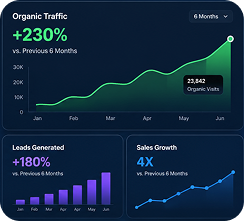
Track DA monthly or quarterly, and pair it with real SEO metrics like:
- Organic traffic growth
- Keyword rankings
- Leads / conversions from organic
- Pages gaining impressions and clicks in Search Console
DA is useful for context. Performance metrics are what matter.
Final Thoughts
A “good” domain authority score is the one that helps you compete.
Use DA as a benchmark to understand where you stand—but don’t treat it as the end goal. The real goal is:
- Better rankings
- More qualified traffic
- More leads and revenue
Authority supports performance—but performance is what pays.
FAQ
Is domain authority the same as Google ranking?
No. DA is a third-party estimate. Google ranks pages based on relevance, quality, and authority signals—not a DA score.
How long does it take to increase domain authority?
Most sites see meaningful changes over 3–6 months, depending on link acquisition and content publishing consistency.
Can a low DA website still rank?
Yes. If you target the right keywords and build strong pages, you can rank even with a lower DA—especially in local or niche markets.
What matters more: DA or backlinks?
Backlink quality matters more. DA is a reflection of link strength, not the driver.
Should I focus on DA or organic conversions?
Conversions. Use DA as a benchmark, but measure success through organic traffic, leads, and revenue outcomes.